Monday, 22 July 2013

في مديح عدم التأكد والأفكار المعقدة وألوان الطيف


(١)

هذه مقالة منعزلة عن كل ما يحدث، ولكنها عن كل ما حدث، وكل ما يحدث، وكل ما سيحدث.

***

(٢)

مقدمة كان لابد من إختصارها بعض الشيء:

في بداية حياتك تلعب في بيتك وحيدا، فترسم عشوائيا وبكل حماسة بالقلم الرصاص الأسود على الصفحات الخاوية البيضاء، فلا يهمك كثيرا ما ترسم بقدر إنبهارك بالرسم كفعل في حد ذاته، وبقدر إنبهارك بقدرتك على ترك أثرا أو صنع شيئا من لا شيء. ثم تذهب إلى الحضانة فيعطونك كتيبات الرسم التي تقوم فيها بتتبع صورا مرسومة مسبقا بنفس القلم الرصاص البسيط، فتكتشف بعض مما يمكنه أن يصنع. ثم تأخذ كتب التلوين فترى الرسومات ذات الفراغات، كلها خطوطا سوداء دقيقة مرسومة على صفحات بيضاء. ثم يعطونك علبة أقلام من ثمانية ألوان دارجة، فتقوم بالتلوين بها في تلك الكتب لفترة حتى تحفظ مع الوقت مواقع الأقلام في العلبة دون الحاجة للنظر إليها، ويتمحور عقلك حول تلك الألوان الثماني وما يمكن أن تفعله بها. ثم تكتشف يوما - إنت كنت محظوظا - علبة الألوان ذات ال٢٤ قلما، وذات الأطراف السميكة والرفيعة، فيكاد عقلك ألا يصدق نفسه، وتتحسر على كل ما كان يمكن أن تقوم بتلوينه منذ سنة أو أكثر بشكل أفضل وأكثر واقعية لو كنت تعلم أن هذه الألوان والأنواع من الأقلام موجودة. ثم تكتشف علبة ألوان بها أكثر من خمسين لونا، فيزداد عدم تصديقك لما بين يديك. وتقع في غرام كل الألوان تقريبا، حتى وإن كنت تفضل بعضها على البعض، فتجربها كلها ولو مرة واحدة على الأقل لتراها بعينيك، ثم تستخدمها كلها تقريبا بعد ذلك بحسب حاجتك دون رفض قاطع لبعضها. ثم تبدأ أنت في رسم الأشكال التي تريد تلوينها، دون التقيد بكتيبات التلوين الجاهزة، فتعرف أن الإحتمالات ربما تكون لانهائية لما يمكن أن تصنعه. ثم تكتشف ألوان الماء وألوان الزيت والرصاص والفلوماستر وغيرها، وتكتشف أن نفس درجة اللون يوجد منها أنواعا مختلفة ذات خصائص وإستخدامات متعددة. ثم تأتي تلك اللحظة عندما تكتشف - ربما بمحض الصدفة - أنه يمكنك أن تخلط الألوان لتصنع لونا جديدا ربما ليس عندك منه في تلك اللحظة، أو حتى لونا جديدا لم تتخيل وجوده، فتدرك أنك قد صرت أنت في هذه اللحظة شيئا لم تتخيله قط: صانعا للألوان، وليس مجرد مستهلك لها. 

ستحتار كثيرا عند وصولك تلك المرحلة قبل أن تقرر ماذا سترسم اليوم، وعلى أي نوع من الورق، وبأي أداة للرسم، وكيف ستلون تلك الرسمة إن إخترت تلوينها، وبأي نوع من الألوان، إلخ. إلا أنها ستكون حيرة ممتعة، تأتي من معرفة أن الإحتمالات لا تنتهي.

***

ثم تمر السنوات وتكبر في العمر، وتعود إلى الوراء.

فتصير دائما مطالبا بأن تختار بين أبيض وأسود، وبين هذا أو ذلك، وفي كل الأمور، بدئا من رؤيتك للدنيا، من تحب ومن تكره، موقفك من أحداث تاريخية وأحداث حالية، أراءك الأيديولوجية وأراءك في الشعوب والفنون والكتب والشخصيات العامة والعادات والتقاليد والقوانين والسياسة والرياضة، وغيرها. وفي بعض الأمور، فهناك بجانب الأبيض والأسود بعض الألوان والأراء الصلبة المحدودة المعدة سلفا التي يمكن أن تختار منها، ولا تختار خارجها. فإن لم تستطع، فأنت إذا بالنسبة للبعض ضعيفا، غير حاسما، مراهقا فكريا، مضيعا لوقتك في نقاشات واضحة، تريد أن تختبئ بجبنك وترددك وضعفك وراء ستار من الحيادية أو الوسطية أو المغامرات الفكرية الكاذبة. وبالتأكيد، فالبعض لديه بعض المشاكل الحقيقية في إتخاذ القرارات والمواقف بالفعل.

ولكن البعض الأخر يختلف.

فمتى أصبح رفض الأبيض والأسود كلونان مجبوران علينا عيبا وضعفا وترددا؟

ولماذا ننسى كل الإحتمالات والألوان التي بينهما؟

وننسى الألوان التي بين الألوان؟

وننسى أنواع الألوان والأقلام؟

وننسى أنه يمكننا أن نصنع الألوان بأيدينا؟

أو أنه من حقنا كذلك أن نترك الورقة بيضاء إن أردنا، ولو لفترة!؟

***

(٢)

قيل لي عندما كنت صغيرا أنه من قال لا أعلم فقد أفتى”. ومنذ ذلك اليوم، لم أسمع أحدا يُفتي بتلك الفتوى تحديدا!

***

لماذا صرنا رافضين أن نقبل أننا قد نحتاج إلى وقت طويل للتفكير في بعض الأمور، وأننا قد نكتشف أن ما لدينا من معلومات وقدرات تحليلية لا يسعفانا في الوقت الحالي؟ لماذا نرفض بأننا أحيانا فريسة لطُرُق التفكير والأدوات التحليلية والقوالب والأفكار المعبأة مسبقا، والتي يعاني عقلنا دون ذنب منه للخروج منها؟ لماذا نرفض أن بعض الأسئلة ربما لا يمكن الإجابة عليها مطلقا لصعوبتها أو لعدم إمكانية الحصول على المعلومات القاطعة للإجابة عليها؟ لماذا نرفض بشكل متزايد أن نقبل أنه في جدل ما قد نجد أن كل أو أغلب وجهات النظر بها قدر من الصحة، أو أنه قد لا توجد وجهة نظر واحدة منهم تبدو صحيحة كليا لنا، وأننا ربما نحتاج إلى فكرة جديدة تماما؟ لماذا لا نقبل أن الكثير من الأمور لا يمكن التأكد منها بأكثر من ٩٩.٩٪ على أفضل الأحوال؟ ولماذا لا نقبل بأننا كلنا منحازون بشكل مُضِر أثناء بحثنا عن الحقائق والإجوبة بسبب إنتماءاتنا السياسية والإجتماعية والمجتمعية والثقافية والعمرية وغيرها، وما تعودنا عليه وتم إجبارنا على التعود عليه حتى إعتقدنا أنه أمرا طبيعيا لا بديلا عنه، مما سيؤثر سلبا على موضوعيتنا بشكل لا مهرب سهل منه، وعلى ما نريد من الحقيقة أن تكون؟ لماذا نفترض كثيرا أن كل من هو غيرنا بالتأكيد مخطئ في خياراته أو قناعاته أو تفضيلاته أو أسلوب حياته؟ لماذا لا نقبل أن عدم التأكد من أمر ما، ولو مؤقتا، قد يكون الموقف السليم عقليا ونظريا بما لدينا من معلومات وبيانات وتحليل في تلك اللحظة؟ لماذا نرفض، مثلا، أن شخصا ما مثيرا للجدل (له من يقدسه ومن يكره يوم ميلاده) قد يكون به من العظمة ومن الحقارة في نفس الوقت، دون تناقض بالضرورة؟ لماذا نرفض أن بعض الصراعات قد لا تكون بالضرورة بين خير وشر مطلقين، ولكن بين خيرين أو أكثر، أو نوعين أو درجتين من الشرور أو أكثر؟ لماذا لا يرى البعض المفارقة بأن أغلب العلماء الحقيقيين يبدؤون كلماتهم ب "أنا أعتقد"؟ لماذا نرفض في عناد أن الكثير من الإجابات بطبيعتها معقدة ومتعددة المحاور، وأن تبسيطها المبالغ فيه ليس من النجاح أو الذكاء في شيء؟

***

الإقرار بعدم المعرفة أحينا وبعدم التأكد، بعدم التخوف من طلب المزيد من الوقت والمعلومات، برؤية قدر من الصحة في الكثير من وجهات النظر المتنافسة أحيانا هم من علامات الشخص المنفتح فكريا، الشخص الذي لا يشعر بالنقص أو الحاجة المستمرة في إثبات عدم جهله عن طريق إدعاء التأكد على ذاته قبل إدعاء التأكد أمام غيره، وهو كذلك الشخص الذي لا يخاف تشكيل حقائقه وإجاباته بذاته بعيدا عن الحقائق والإجابات المعدة مسبقا، والشخص الذي يعرف بأنه يوجد أكثر بكثير في طيف الأفكار والإحتمالات والإجابات من الأبيض والأسود، بل وحتى أكثر بكثير جدا من الألوان الصلبة والأساسية التي نجدها في علبة التلوين التي ذات ال٨ أقلام التي تربينا عليها كأطفال وحفظتها عقولنا، وتعودنا مع الوقت ألا نملئ الفراغات إلا بها، وأصبح من الجرم أحيانا أن تخرج عنها.

فلنمدح للحظة هؤلاء الذين يرون كل الألوان، والذين يصنعون الألوان الجديدة إن إحتاجوا لذلك، الذين يدمنون البحث النزيه عن الحقائق بدلا من إدمان إتخاذ المواقف في أسرع وقت ممكن ليحصلون على ثقة خاوية في أنفسهم، والذين يعرفون أن إجابات "لا أعلم، لست متأكدا، أنا أعتقد، دعني أفكر، ليس الأمر بهذه البساطة" هي إجابات عظيمة تحتاج البشرية أن تستخدمها أكثر بكثير مما تفعل الآن. ولنمدح للحظة من يحطمون القوالب ولا يخافون الخروج عنها. ولنمدح للحظة من يقرر كل فترة وفترة أن يعود عقله صفحة بيضاء، يقوم بإعادة رسمها وتلوينها دون خوف.


*(هذا مقال كتبته منذ فترة ونسيته تماما، ثم تذكرته فجأة وقررت نشره اليوم.)

Friday, 19 July 2013

What Complicates Reconciling With The Brotherhood In Egypt

Supporters Of Morsi In Rab'aa Square

This is not an exhaustive piece. Rather, this is mainly an appendix to a piece I've just published in Al-Monitor, debating the options the Brotherhood could pursue now, and the situation they're in.

There is a lot of talk about whether or not reconciliation in Egypt can actually take place, and the talk understandably focuses largely on whether or not the current administration (with the military at its heart, or head, depending on how you see it) would reconcile with the Brotherhood if there is such a mood on the other side as well. Critics argue that while the administration might be sounding many correct gestures and claims (including regularly reassuring inclusion and reconciliation while also allegedly offering cabinet positions to Brotherhood members), there are arrests and seemingly a legal witch hunt against the Brotherhood and allied Islamists. The critics further argue that if the current leadership in Egypt somehow decided behind the scenes that enough was enough, things would just cool down, the witch hunt would stop, the media in Egypt would tone down its obviously biased (read: vengeful) tone. But that perhaps misses at least some the complexity of the situation.

What is important to note is that each of the current anti-Morsi groups seemingly has its own vendetta. The judiciary has had a long fight against Morsi and the Brotherhood. The prosecutorial corps in particular has been up in arms against Morsi's handpicked prosecutor-general and what his reign entailed. The private media has been furious (other than due to ideological enmity) from intimidations by Morsi and the Brotherhood against them, including the onslaught of "Insulting The President" and "Contempt Of Religion" charges as well as the regular siege of the media production city by Islamists, among others. The police is not exactly a friendly entity to the Brotherhood and Morsi either. The liberal and leftist parties, which mostly backed Morsi in his run against the secular opponent Ahmed Shafiq who was seen as close to the former regime, now speak of Morsi as they speak of Mubarak, if not worse; and of the MB as they speak of the NDP, if not worse. There are even those in the state bureaucracy who resented what they saw as the "Brotherhoodisation" of the state, namely the installation of Brotherhood members in key positions, perhaps regardless of qualification. Then there is the military of course. But perhaps most importantly, the degree of popular outrage against the Brotherhood is apparently such that, if the reports some share are accurate, the grassroots anger and exclusionary sentiment towards the Brotherhood by even many normal people has become quite substantial (yesterday, a non-Cairene was claiming to me that Brotherhood-owned shops in his town were being attacked).

My point here is that there are many who have their own separate scores to settle. So, even if the country's "leadership" did decide to reconcile, it's not necessarily a given the others would simply play along. Reconciliation in Egypt would be a long, difficult and multi-layered process.


Monday, 15 July 2013

A Note On Recent Western Punditry On Egypt


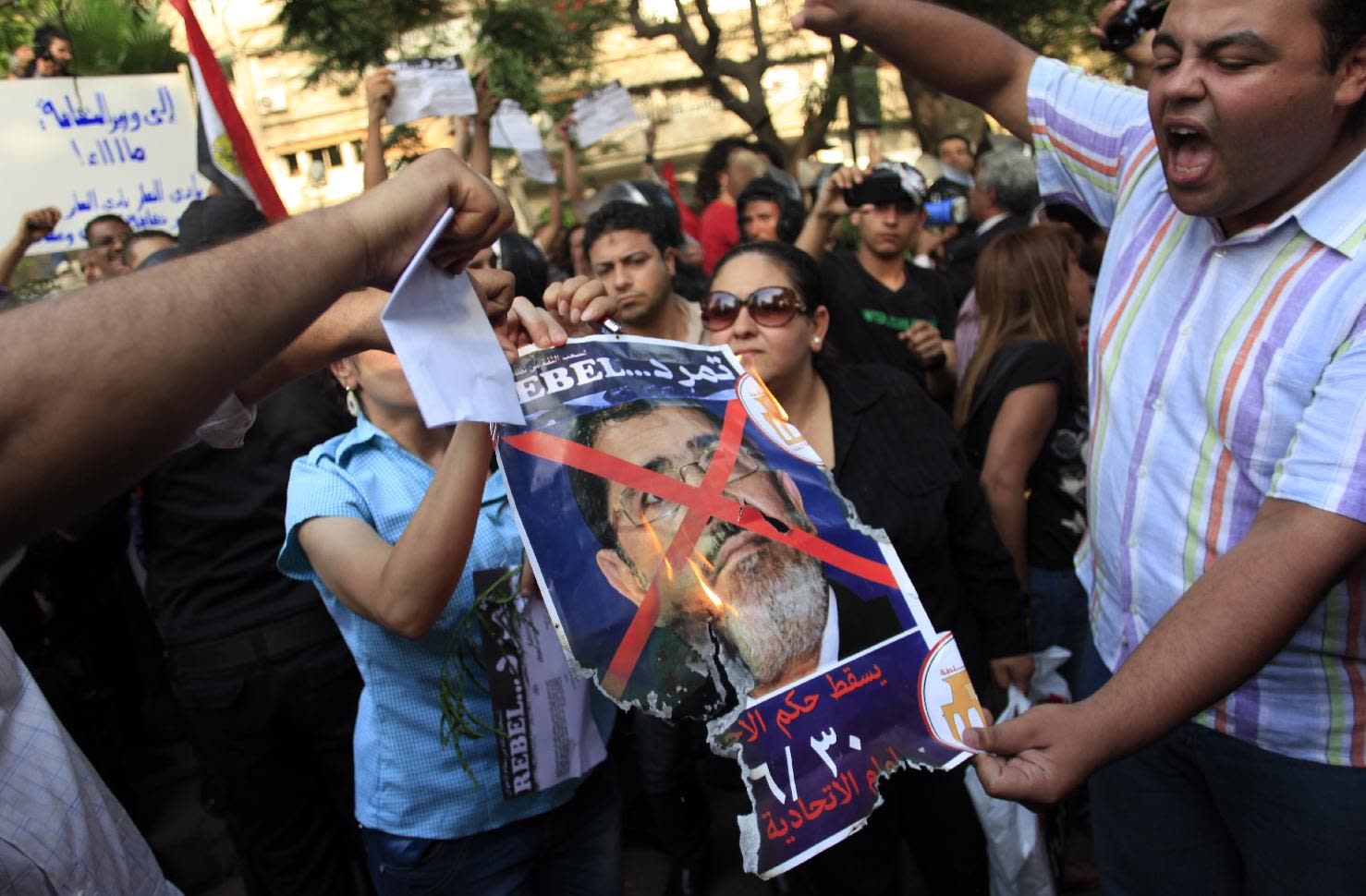
Morsi proclaiming that one year was enough for his patience
 with the media and opposing figures

There is certainly a lot of writing coming out on Egypt these days from around the world. A lot of it is brilliant, thought-provoking work, and some of it often provides an outside perspective that those who remain inside the country or are entirely focused on it could sometimes lose. But, on the other hand, a substantial portion of it suffers.

More specifically, there are often way too many generalisations, rushing to sensationalist conclusions, much over-simplification, too many attempts at comparing Egypt to Pakistan or other countries, at times a desire for content-destroying political correctness (that we all suffer from at times), generalist knowledge by some commentators of the Egyptian situation that lacks some modicum of fuller cognition of its details and complications, and more. Egypt appears to increasingly be its own complex experiment and model, and even many of us who literally do nothing but write on Egypt find many of its developments to be baffling. Egypt is not a straightforward country by any means possible. 

Example of such writing? Almost all the "End Of Political Islam"-proclaiming articles. But my main concern here is the increasing apologist, politically correct and somewhat whitewashing tone recently apparent in writings on Morsi and the Brotherhood. I have consistently, and up to June 30th, argued that reconciliation was the only path for Egypt, and saw that it was best - all things considered - that Morsi stayed in power, rebuilt his legitimacy and created a new national political contract everyone could accept. I still believe in reconciliation and inclusiveness. And there is indeed much to criticise about the state of Egypt right now. Such list includes: the unbalanced and unprofessional approach of the media to the current situation and the suspension of all pro-Morsi outlets. Morsi’s continued detention is a cause for deep concern. The list also includes the ultra-polarised and often vile political environment and discourse that exists, coupled with a mutual complete demonisation of the other. It also includes the apparent witch hunt against the Brotherhood and the dwindling reconciliation and inclusiveness prospects. Some of the details of Military's roadmap come to mind as well. The actions of the NSF, now and before, surely make an appearance on the list. The tragic loss of lives from the Republican Guard debacle is unforgettable. And more. And for many, the resilience of the Brotherhood and its few remaining allies is quite impressive to be sure.

But that does not mean that Morsi’s presidency should suddenly be whitewashed or his (and the Brotherhood's) mistakes or transgressions be downsized. As far as I'm concerned and as I enumerated in more detail recently, I believe (as mindful of my biases, and of the challenges posed by the deep state against Morsi, as I can be) Morsi had swiftly stabbed his claims to “legitimacy” since November when he issued the disastrous decree, that he had no power to issue in the first place, putting himself entirely above the law and the existing constitutional framework (he only rescinded it after having achieved its purposes, and while keeping all effects obtained through it.) Morsi followed that by a reckless detonation of the constitution-drafting process and the denial of Egypt of the chance to have a  respected political framework everyone can unite around (Egypt's Opposition did not recognise the new constitution, at least as it stood, and with some fair reason). Since then, and instead of attempting to rebuild his legitimacy, Morsi and the Brotherhood embarked on an aggressive power grab that even alienated his former Islamist allies and turned his former revolutionary coalition against him, violated the separation of powers, used intimidation (legal and beyond, mostly through allies) against the private media and the opposition, created a deformed and widely-denounced MB-dominated ersatz full legislative entity in the Shura Council, among many other things (click her for a longer, but definitely incomplete, list). His last act of power before June 30th was a two-and-a-half hour speech in which he was bluntly promising that "one year was enough" of his patience with the supposed transgressions by opposing figures and the media (even cartoonishly naming names on air) and that he was planning firm measures against them, which was followed the  day after by preliminary measures including removing opposition channels from the management board overseeing the (media) free zone, putting an opposition TV network owner on a no-fly list all of a sudden for alleged tax problems that just happened to matter before June 30, and sacking the head of a state-owned conference centre the opposition used. All of this is setting aside utter ineptitude in managing the state, a unanimously denounced government (even by the Brotherhood and the FJP!), hate speech and incitement used by his supporting media (in some ways being channeled now by a somewhat vengeful private media), and more. I genuinely believe that Morsi's legitimacy by the time of the June 30 uprising (and even, more controversially, much of that of the constitutional framework he spearheaded)  should at least not be treated as a firm given in any debate. Some will come back with arguments along the lines of "the deep state and the politicised judiciary required some unorthodox responses", and they'd be substantially mistaken. It essentially required maintaining the unity of the revolutionary front along sensible lines and compromises, the same unity that got Morsi barely elected. 

Commentators have all the right in the world to be strong in the criticism and worry of what is happening in Egypt right now, including the role of the army in this entire process, the potential implications of  the suspension of a constitutional framework, the possible return of much of the former regime and the police state, and the vengefulness of much of the state and media against Morsi and the MB. But downsizing what Morsi has done in his year in power, the destructive impact his presidency has had on Egypt's transition towards a proper political and constitutional base (and on the condition of Egypt itself), the derailment of the January Revolution and its division, all this downsizing has a dangerous effect on the fullness and value of the current conversation and debate. The pro-Morsi rally can be admired for its steadfastness, patience, unity and even courage. But the claims sounded from its stage of defending democracy, legitimacy and protecting the January Revolution have a difficult ttime registering. 

Of course, feel free to disagree, and I certainly do not claim to have ownership of the truth.

Monday, 17 June 2013

بين الإحباط والغضب والأمل


سوف أرتكب، نسبيا، جريمة صغيرة وبريئة في هذه المقال. فلقد قررت أن أنشر في الكثير من نصه - على عكس العادة - بعضا من الطاقة السلبية التي أشعر بها. ورأيت لذلك أنه من الأفضل أن أنشرها في مدونتي بدلا من موقع، مع أن الفكرة قد راودتي.

فمصر تمتلئ بحالة من الحراك المهول هذه الأيام، والطاقة البشرية المتفجرة بأنواعها منتشرة في هواء بشكل غير عادي، ويكاد يكون من المستحيل أن تتجنب أي من ذلك حتى وإن حاولت بأقصى جهدك. فالكل يتحدث عن يوم ال ٣٠ من يونيو، والشوارع تمتلئ بالمشهد المتفرد لحركةتمردوهي تكاد لا تلاحق على الطلب المتزايد على التوقيعات وتقترب بحسب زعمها من عدد التوقيعات التي تسعى وراءه، وأرى الشباب والكبار وهم يقفون بصورة متواصلة في الحر القاسي ليقومون بتوزيع الإستمارات، وأرى الناس وهم ينزلون من سياراتهم ويعبرون الشوارع ليوقعوا (وأنا منهم) على الإستمارات تلك. وأرى عزما حقيقيا بعدم الإستسلام لميلاد ما يراه هؤلاء أنه نظام متسلط جديد، وهناك كذلك مناعة متزايدة ضد الإنسياق وراء الإبتزاز العاطفي أو الشعارات من هذا النظام ومؤيديه. وفي المقابل، فإن مؤيدو هذا النظام أو هذه الإدارة الحالية أيضا في حالة من الحراك للدفاع عن وجهة نظرهم وعن ما يرونه من حكم لا يزال - في رؤيتهم - لديه من الشرعية ما يكفل بقاءه، ويجمعون كذلك التوقيعات لحركةتجرد، ويتحدثون - بعيدا عن رأيي فيما يقولون - عن الديمقراطية والشرعية تارة، وعن الإستعداد كذلك لبذل الجهد والجسد تارة أخرى إذا ما تطلب الأمر. وما بين المسيرات والتوقيعات والإعلام والتويتر والفيسبوك والبيانات والوعيد، فإن الطاقة المحيطة تبدو وكأنها تتضاعف لحظة بلحظة بصورة غير طبيعية.

إلا أنني في حالة ذهنية مختلفة تماما رغما عني، ربما لأول مرة منذ يناير ٢٠١١. أشعر منذ أيام أنني منفصلا عن كل شيء بشكل متزايد، وأنني أشاهد ما يجري من الخارج كمن يشاهد أحداثا كبيرة في دولة أخرى على شاشة تليفزيونإنه خليط من الغضب بصورة الكبيرة، وقدر من الترقب والقلق، وبالتأكيد الكثير من الإجهاد والإستنفاذ. ولكنه بصورة أكبر، للأسف، الإحباط. نعم، لابد إنه كذلك.

هو الإحباط مما حدث ومما آل إليه الحال.

هو الإحباط بأن الكثيرون ضحوا لعقود بحياتهم لإصلاح أو إسقاط نظام ظالم، وها هو النظام الجديد القادم بعد ثورة - نظام يوجد به بعض أكثر من عانوا من النظام السابق - يعيد ما سبق وبشكل أكثر ضررا وسخافة. هو الإحباط من أننا قد فشلنا في تكوين جمعية تأسيسية نتوحد حولها أو في كتابة دستور نتفق عليه أو في بناء وطن ودولة يشعر الكل بأنها دولته ووطنه. هو الإحباط أننا إنتقلنا من الإتفاق على إلغاء وزارة الإعلام، إلى إلغاءها بالفعل، إلى عودتها، والآن إلى بدء البعض في الكلام عن أهمية بقاءها. هو الإحباط من عدم إصلاح مؤسسات الدولة كما كنا إتفقنا كلنا يوما. بل، هو الإحباط من أن النظام الحاكم (أو الإدارة الحالية) يحاول السيطرة كذلك على مؤسسات الدولة لصالحه بدلا من تكوين قواعد للحوكمة تحمي وتفصل الدولة ومؤسساتها بشكل كافي عن كافة الفصائل السياسية بما يحافظ على إستقلالية أساسية. هو الإحباط من تحويل منظمات المجتمع المدني والمنظمات الحقوقية لتبدو أمام الرأي العام وكأن كلها أوكارا من الشر، بدلا من تنمية المجتمع المدني والدفع بإتجاه إزدهاره. هو الإحباط من زيادة ملاحقة الإعلام ومن القوانين البالية المنظمة للأمر، ولكنه الإحباط في ذات الوقت من تردي مهنية وموضوعية بعض الإعلام والإعلاميين لدى كل الأطراف. هو الإحباط من تخبط المعارضة المستمر وإعادة إختراع العجلة كل عدة أشهر، وفشل الحكومة المتزايد والتمسك المتزايد بها كذلك. هو الإحباط لتفشي الشعور بالضبابية في كل شيء، ولإستمرار الظلم بينما يُطلب العدل، ولثِقَل القلق في وقت كان المفترض فيه الأمان.

هو الإحباط من تصاعد الكراهية بيننا بشكل مخيف، وتزايد الحديث عن العنف والموت والتهديد والوعيد بشكل يومي، ورغبة المزيد والمزيد من الناس في إختفاء وتدمير كل من يخالفهم فكرا أو أسلوبا أو قناعة، أو في أستخدام القوة بأنواعها لإجباره على أن يمتثل لرغبتك أو رؤيتك. هو الإحباط من قناعة البعض بأن الأخر، أيا كانت الأطراف المقصودة، يمكن أن يختفي بين يوم وليلة بقمع أو عنف. هو الإحباط من عدم قدرتنا على أن نتفق على أنه من حق كل إنسان على أرض هذا البلاد أن يعيش حرا كريما دون أن يتدخل أحدا في حياته وإختياراته يما يتعدى الدفاع عن حرية غيره، ولأنه بالتأكيد توجد صيغة ما تاهت عنا، صيغة تسمح لنا كلنا بأن نعيش في هذه البلد وأن نبنيها بما يحقق رؤية جماعية لوطن يجمعنا جميعا، وليس لتحقيق رؤية بعضنا بصورة إجبارية على الكل. هو الإحباط من التخوين والتكفير والصوت العالي والسباب والإفتراءات والأكاذيب والعنف. وهو الإحباط من إستمرار تهديد وحجز وإصابة وموت الشاب والكبير ممن لم يريدون سوى الدفاع عن وطنهم وحريتهم بأصواتهم وبأنفسهم. وهو الإحباط والقلق من أن أخرين قد يحدث لهم نفس المصير بعد أيام.

هو الإحباط من عدم قدرتنا على بناء دولة ديمقراطية حديثة نتوحد حول أساسياتها بعد مرور أكثر من سنتين على الثورة، ومن عدم ترسيخ فهم حقيقي للتوازن بين حقوق الأغلبية والأقليات والأفراد. وهو الإحباط من فشل صانعي تلك الديمقراطية والمشاركين في بناءها، ومن الفشل المذهل للنخب السياسية في مصر على إختلافها على طول الخط. هو الإحباط من إستمرار سلبية البعض من الناس القادرين ولو في أبسط الأمور. هو الإحباط من تنامي الطائفية وعدم التسامح والتعايش، وتلذذ البعض بهذه الطائفية وسعيه وراءها، وشعور البعض بأنهم كالغرباء في وطنهم بعد ثورة لم تكن لتنجح دونهم. هو الإحباط من إنتشار الفكر الرجعي والإقصائي بأنواعهما بشكل أكبر مما تخيلت. هو الأحباط من عدم قدرتنا على الإتفاق على قوانين أساسية كقانون الجمعية الأهلية أو حرية المعلومات أو تطوير السلطة القضائية بشكل توافقي أو قانون التظاهر أو إقليم قناة السويس أو غيرها، وأن الخلاف حول كل من هذه القضايا يبدو شاسعا، وأن وجهة نظر كل من الأطراف في أي من الأمور، البسيط منها والخطير، صارت وكأنها قضية حياة أو موت له، وأننا فاشلون حتى في القدرة على الحوار. بل كذلك هو الإحباط من مضامين أغلب الحوارات والنظريات والمؤامرات والأفكار المصاحبة لها، بدءا من السياحة الإيرانية المرعبة وإنتهاءا بالباليه المخيف ومرورا باللغة الإنجليزية المدمرة وإغلاق المحال المبكر لكي تنام الناس رغما عنها في مواعيد مبكرة لأن الحكومة تدرك مصلحة الناس أفضل منهم. وكذلك الإحباط ممن يؤمنون، بما يخالف العقل والمنطق والعين والأذن، بأن كل ثوراتنا كانت مؤامرات خارجية وكأننا قطعانا يتم تسييرها حسب مزاج الغير، لأننا نظل أن نرى أنفسنا على أننا لا شيء، فاقدين للعقل أو الأهلية أو الإرادة. وهو الإحباط من تصديقنا لكل من يقول كلمة ترضينا، أو تكذيبنا لكل من يقول كلمة ليست على هوانا، وعدم سعينا وراء المعلومة بأنفسنا، وإنغماسنا وراء الشائعات والمؤامرات والخيالات الشخصية.

هو الإحباط من سياسة خارجية متخبطة، وفقدان مصر لإستقلاليتها ومكانتها وقدراتها وإحتياجنا للغير بشكل متزايد، ومن لحظات أردنا فيها أن نبدو أقوياء فظهرنا ممتلئين بالتعالي والعنجهية أمام جيراننا، وخسرنا بهما الكثير دون أن نكسب ولو القليل. هو الإحباط من كل من يقنع نفسه بأنه لم يفشل في دفع مصر إلى الأمام، ولكنه يحمل مسئولية هذا الفشل للفلول والظروف والأطراف الثالثة والمؤامرات ويقنع نفسه بأنه عليه أن يتماسك في هذه المحن. وهو الإحباط ممن لا يزالون يفعلون نفس الشيء مرة تلو الأخرى تلو الأخرى، أو لا يفعلون أي شيء مطلقا، ولكنهم يتوقعون نتائج جديدة، وهو تعريف الجنون. هو الإحباط من تزايد تسلط البشر على البشر. وهو الإحباط من الخوف على الحريات والحقوق ولقمة العيش.

وهو الغضب كذلك.

لست محايدا، ولم أدعي يوما وأني كذلك. ولكنني أشعر بالإجهاد وبالإحباط من حالنا، والذي لم يكن بالضروري مطلقا أن نصل إليه، وليس من الضروري أن نستمر فيه

ولكن لا يزال لدي أمل.

هو مرض يبدو أنني لن أشفى منه، ولا أريد أن أشفى منه، وهو الشعور المزمن بالأمل، وإيماني بالتغيير، وبحتمية إنهيار الظلم أيا كان، وبحتمية نهوض العقل، وبحتمية إنتصار العدل والحق. ولكنني، كما كنت قد كتبت منذ فترة، أشعر بأنه شعورا مُسبَبا وليس خاويا. لقد تفجرت وتدفقت ينابيعا من العزيمة والشجاعة والتضحية، ومن الفنون والإبداع والتعبير، ومن الإستماتة من أجل الحرية والكرامة والحقوق والعدالة، وسنجد كلنا طريقنا يوما ما، عاجلا أم أجلا، وبإذن الله.

ولا يزال لدي أمل

Wednesday, 12 June 2013

A few pieces of mine you might have missed

So, I haven't been updating the blog as much as before. I've mostly been writing outside of it as of late, largely on Al-Monitor. Check my page there for some of the stuff you might have missed.

Click here for the page. And, of course, thanks for being interested.


Tuesday, 11 June 2013

Is Morsi's Call For National Reconciliation Sincere?


Doesn't seem so.

Speaking yesterday in an all-Islamist conference on water security, Egyptian President Morsi called for national unity and reconciliation talks. Since November, with intermittent exceptions, the president and the Brotherhood on one hand and the opposition on the other have officially not been on speaking terms. Remarkably, in his speech, Morsi said that he's "willing to go anywhere" for that goal, which some saw as an intentionally provocative analogy made by him to Sadat's pre-Camp David rhetoric towards Israel. In any case, the general sentiment is that there is little reason to think that the calls are anything but a political tactic. The opposition has pretty much refused the talks, with only the SDP's leader Mohammed Abul-Ghar suggesting that true intention for compromise must be proven first so that dialogue takes place.

Now on one hand, it's true the opposition has made several mistakes since November, especially not attending the National Dialogue talks during the constitutional crisis, and has lost several opportunities to corner Morsi and the Brotherhood for political breakthroughs. On the other, the general sensation has been that Morsi and the Brotherhood aren't interested in compromise anyway, at least not anymore. Just looking from the outside, the Brotherhood and Morsi have pretty much snubbed every demand by the opposition (and even those of former ally, Al-Nour Salafi Party) since November. Instead of a technocratic or a national coalition government till the elections, Morsi has kept controversial PM Hisham Qandil and has expanded Islamist and Brotherhood presence in the cabinet. The also controversial prosecutor-general remains in place, strongly fighting even the judiciary's attempts to unseat him. The electoral law remains divisive, in addition to pretty much the rest of the legislative agenda by the Shura council, largely denounced by the opposition and civil society. The legislative authority draft law, designed to axe more than 3000 senior judges, and widely refused by the opposition and the judiciary, shows no sign of being revised. In addition, demands for a revision of the constitution have been tied to parliament convening and debating the demand for amendments, as Islamists expect to dominate the coming parliament anyway due to their organisational superiority, giving them the upper hand over any suggested amendments. These are examples. And even further, several considerable sources - some connected to both sides - I've spoken to argue that the Brotherhood is snubbing any behind the scenes efforts towards real compromise by "go-betweeners." Even when opposition leader Amr Moussa, from the more pragmatic wing of the NSF, recently met face to face with Khairat El-Shater, Moussa's official view is that the void between both sides turned out to be larger than he expected (setting aside the avalanche of criticisms he received for going to that meeting).

So why the calls for reconciliation now? Likely for two reasons.

First, a key condition for the Sysiphean IMF loan has been political stability and reconciliation. Given that, and increased international and local criticism, Morsi will benefit from looking like a statesman seeking national unity. Second, the planned June 30th Protests seem to be gaining much steam, with the Tamarrod movement recently announcing they're already close to reaching 15 million signatures demanding early presidential elections. Ostensible moves for national reconciliation talks could potentially lead to divisions in the opposition both on leadership and grassroots levels, and/or dispersement of the some of the momentum leading up to the protests.

The third theoretical option, for sure, is the relatively far-fetched possibility Morsi really means it. But despite the intransigence of the opposition, the ball is really still in Morsi's court. If Morsi truly wishes for national reconciliation then he must do more than broad announcements or generalist calls. He must take a concrete unilateral step in that direction, giving opposing forces something meaningful that they've been wanting, and there's a substantial menu of options for him to choose from. The problem is, however, with the rising popular polarisation and the heating momentum towards June 30th, it will seemingly take a lot for anyone to listen.


Tuesday, 4 June 2013

Egypt, Turkey, The World And A New Political Spring

[Note: after writing dozens of mostly dry political analysis pieces, here's something out of the box. I wrote this yesterday, but left it unpublished, edited it after Gül's speech.]

It is never too soon to draw perhaps premature conclusions, and I am not one to shy away from such act. Having been deeply engrossed in Egypt’s political conflict and now as we observe and attempt to analyse the protests in Turkey, one can find one important parallel between both: there is a mounting feeling by a significant portion of the population that one political side is becoming too domineering, even if often through the polarising usage of technically legitimate political and legislative means.

In Egypt, a rising sentiment is that the Brotherhood is increasingly power hungry and monopolistic, cares less and less about dissenting opinion (even from other Islamists, as evident by the rift with once-ally Salafist party Al-Nour). The sentiment continues that the Brotherhood is perhaps rightly too confident that deep Islamic-Liberal polarisation, its dedicated base and incomparable eight decades-old electoral and organisational machines are likely capable of substantially winning it any elections being held despite the mounting public disapproval and anger against it. In Turkey, Erdogan and the AKP’s hold on parliament has been growing with every successive elections, their popularity theoretically stronger than ever, and now feel perhaps more comfortable in being more unilateral and swift in their political agenda (in addition to the increasing crackdown on dissenting journalism.)

So what do anti-government protesters in Egypt and Turkey want and express? Well, many things, some are  perhaps legitimate, some perhaps more towards the hyperbolic. But, like I mention, one of the themes I feel has been pervasive in both countries was the demand for a more inclusive and widely-consultative democracy, and that a simple majority cannot just have its way, whether in terms of policies or overall national vision. This appears to be what Turkish President Abdullah Gül understood when he said on Monday that he “the messages [...] have been received”, and that “democracy does not only mean elections.” According to Turkish journalists on social media though, Prime Minister Erdogan said he wasn’t sure what message the president thinks he has received, likely raising the ire of protesters. On the other hand though, Egypt’s president Morsi and the Brotherhood seem to be getting the opposite message altogether from repeated protests, so perhaps Erdogan’s angry confusionwas relatively a blessing.

But as you also try to observe the political climate in much of the Arab world, Europe and the US, you can feel that something larger is perhaps happening. There appears to be greater disillusionment with the existing political elite, for example, as we saw in countries like Italy and Beppe Grillo’s meteoric success with his Five Star Movement. But more importantly, there also appears to be a demand for an evolution to the current pervading political paradigm.

The current political system, in all of its frameworks and practical variations around the world, centres around a presidency and parliament that varyingly share power for several years before new elections come forth, and in which a simple majority in parliament has strong powers. Political systems remain remarkably similar despite their differences, trying to balance - among others - efficiency and expediency with consensus, the need for stability and long term focus against the need for regular change, votes of confidence and short term benefits, in addition to balancing the demands of majorities against the desires and rights of minorities. Furthermore, there is also the need to balance a politician’s theoretical need for enough time to regularly juggle what his district wants him to do and what he is willing to dissent with his district on for what he perceives as their own benefit and national interest, trying to eventually come out as having pleased his district in totality towards the end of his term.

But today’s citizens and voters are a radically different specimen from those even 20 years ago. People are now more informed and educated than ever (yet also more impatient as well), they have incomparable and continuous access to virtually any information no matter where they go, so much more now happens in a single day than what used to happen in a week only a few years ago (for example, Egypt famously passed a - later suspended - tax law post midnight on the presidency’s facebook page). Politicians are more revealed and in direct contact with people more than ever, through communicating (or being scandalised) on social media, through the 24-hour news cycle, or an almost continuous campaigning mode. Most importantly, voters and citizens are becoming less prone to being swayed by traditional slogans, propaganda or allegiances. They are, in addition, less and less influenced by traditional leaders, parties and movements, more individual in the good sense, and more willing and capable of making their own voices and opinions heard. And ideologically, citizens and voters are becoming more and more pragmatic, willing to look across the spectrum for trans-ideological solutions and ideas.

There seems to be a need for a new political paradigm to reflect how the world appears is changing.

What would such a new or evolved political paradigm entail? I don’t know, but I have a few partial guesses. For example, and even in the most developed democracies, there would be greater political transparency, more fluid access to information, and a stronger respect for the voter and the citizen as being informed and capable of seeing through the usual usage of inflated  and useless words and political maneuvering. The fact that tools for at least some direct democracy are becoming increasingly available would be turned into a more practical reality, with one debatable example being the White House’s commitment to answer public petitions once they surpass a certain online voting threshold (that example could be also expanded to parliament in some form, as one example) The role of a president and the length of his term should both be revisited and generally reduced.

As for parliament, the idea of requiring more than just a simple or absolute voting majority in parliament (and referenda) should be investigated for at least for some of the more important areas of voting. The voting mechanism should instead be designed in a manner that would generally encourage, if not even necessitate at times, a supermajority of some sort in parliament, perhaps even requiring in some cases that such a supermajority be composed of more than one party. Parliaments should also be further obliged to more impactingly consult on every legislation with relevant major stakeholders, such as unions, NGOs, businesses and more. In cases wherein such stakeholders intentionally issue official demands or critiques of draft laws, the relevant entity or group in parliament should have to issue some formal and publicly accessible responses, thus ensuring that parliamentary majorities cannot just “brush off” stakeholders and their concerns as we have often seen. Perhaps even the composition of parliament itself would be more fluid. For example, each district would be represented by an even number of representatives, each alternate half of whom would have their seats up for re-election every two years, thus allowing for parliament to substantially refresh and revitalise itself more regularly, while also allowing each member and parliament as whole enough chance to focus on the bigger picture. Another alternative, for the sake of the mere exploration of ideas, is the idea of shorter-termed parliaments of - for example - two and a half years or so. Further, each MP would have to be further connected to his district during his time in office. He would still have his independence to vote his conscience and experience, which might often be more correct than voter’s immediate impulses, but he would have to be in greater communication and provide further transparency to his voters and district.

As for the judicial branch, the issue of course becomes a bit more complex and in need of even greater debate. But one area of potential refinement is the often extreme longevity of supreme constitutional court judges. While the position of a constitutional court judge is traditionally designed to logically try and shield the judges from political pressures and potential seduction by interest groups through attractive post-bench offers, today’s often too-long longevity can often lead nations to find themselves quite captive to the un-objective ideological leanings of judges, among other concerns.

More than anything else, universal human rights must increasingly be at the heart of any such paradigm. Furthermore, the state’s ability to infringe upon them under excuse of security and emergency laws must be revisited.

One interesting country to look at is Mexico. The largest three parties comprising more than 90% of parliament, under the leadership of the president, have engaged in a Pacto Por Mexico. This “Pact For Mexico” involves aligning the policies and political goals of those three parties for the coming years until 2018 towards deeply ambitious national targets. It is an experiment worth observing.

In any case, feel free to disregard every example or possibility I raised above. But do consider the main idea itself: that the time has come to a new political paradigm for the 21st century. Perhaps we need a political spring.

Tuesday, 28 May 2013

Egypt's Brotherhood "Is Ruining It" For Other Arab Brotherhoods


During a recent conference I ran into an important figure within Tunisia's Ennahda, generally recognised as the Tunisian incarnation of Egypt's Muslim Brotherhood. That figure, who is considered from the more progressive branch of the movement (also, not a fan of Ghannoushi,) spent a great deal of a time lamenting to me what he saw as strong decline in the popularity of Ennahda as of late. Other than ascribing it partially to Ennahda's own domestic politics, he also threw substantial blame on the shoulders of Egypt's Brotherhood. For him, Egypt's Brotherhood was dominated by a "paranoid, secret-organisation and power-hungry mindset" whose results have "divided Egypt and caused significant damage to the country and its transition as a whole," while also damaging the MB's popularity locally. However, another side effect according to him: making Islamists in general and Ennahda in particular lose even more popularity in Tunisia. He also said that he visited Egypt's Brotherhood sometime recently, offered some counsel, but ended up leaving somewhat disheartened from what he heard and saw. His lamentations went on for quite a while.

I was reminded of this when I reread today Hassan I. Hassan's piece in The National in which he discussed the rising Saudi involvement with the rebels in Syria. Hassan writes, referring to Syria Brotherhood's deputy leader Mahmoud Tayfour and his meeting with the Saudis:
'Two separate sources close to the opposition say Mr Tayfour assured the Saudi minister that "Syria's Brotherhood will definitely not be like Egypt's Brotherhood."'
That in turn reminded me of recent this interview with Moroccan Prime Minister Abdelilah Benkiran, in which he goes to great lengths to dissociate himself and his JDP, also seen as the Moroccan extension of the Brotherhood, from Egypt's Brotherhood. I remember reading around similar rhetoric coming out of Morocco. Then again, this also reminded me, for example, of rhetoric from Libya Brotherhood figures also trying to make it abundantly clear they nothing to do with Egypt's Brotherhood, including these comments by the leader of Libya's Brotherhood Bashir Al-Kabti in which he distances himself from Egypt Brotherhood, further distances himself from its strongman Khairat El-Shater, states that he didn't meet El-Shater during his visit to Libya and that "he only heard about his visit from the media." He then goes on to list a few ways in which the experience of Libya's Brotherhood is "different" [read: better] from that in Egypt, including arguing - for example - the JCP party is genuinely independent of the Brotherhood, and that it was more of a collaborative effort with other political entities in Libya compared to Egypt's FJP which was, his comments argue, more of a mirror reflection of the Brotherhood.

Yes, the statements are officially intended to convey that these other Brotherhood-origin organisations are independent and not satellites of Egypt's Brotherhood, to allay local fears. But I believe, especially in the Syria quotes, that they represent the degree to which the experience of the Brotherhood in Egypt has been disappointing and worrying, as well as the negative impact it appears to be having on the popularity of other Arab Islamist movements. Clearly, had the experience of Egypt's MB (and to a lesser extent Tunisia's Ennahda) been more attractive, Syria's Islamists (and others) wouldn't be the source of the same amount of trepidation they increasingly are for many.

Another attendee of the conference I mentioned in the beginning, who had overheard some of that side discussion, looked towards me after the Ennahda figure had left and spoke with a raised eyebrow as he sipped his fresh orange juice: "You know, the Ikhwan are really ruining it for the rest of them."


Friday, 3 May 2013

Eleutheria - (Almost Everything I Have Learned In My Life)

This last October, on a quite calm and quiet day in which almost no one was in the streets for some reason, it was brought to my attention that I had turned thirty. It was definitely an uneasy and a complex moment for me, one in which I found myself looking back at every moment of my life, and looking forward to everything else I hope to live. The result was this essay of an article which I had published in Arabic in Al-Masry Al-Youm. I had mainly written this article for myself, to remind myself of everything I believe I have learned about life, to give myself a renewed sense of my direction. When I published it, I had hoped that a few people would perhaps take a look at it, share a few of their thoughts and move on, much like any article before that. What actually happened, however, was unbelievable.

The article was one of the, if not the, most shared non-news articles of the year. I received an avalanche of commentary and kind words from across the Arab world. The unplanned impact of this article was beyond humbling. 

A few months back I wrote an English translation, but never got around to finishing it. Here it is. Thank you for reading, and for sharing it.

-----
Eleutheria

I sit with myself, writing down these words as I ponder the beginning of new era of my life, one whose years begin with the number 3 instead of the number 2. I have felt nothing but panic throughout the weeks preceding this transformation, and my panic only grew as this dividing day at the end of October approached. Then, the day came and passed, and I remained, and my face remained the same visage I had one week earlier, and all that changed was my perception and understanding of certain matters. Suddenly, all the years of my existence - until that very same day - passed instantaneously before my eyes, and I found myself realising in a single moment everything I had realised throughout all of those years.

I never became an Astronaut, and even the US has ended its missions to the moon. And rather than becoming a policeman I wrote articles instead about “purging” the Egyptian Ministry Of Interior. I did not marry the American actress Winona Ryder as I had wanted many years ago, and she was even arrested for shoplifting, and I felt significantly relieved I had not pursued this marriage. I have loved once or twice, perhaps even thrice, and upon the loss of my loved one I felt as if the world had literally ceased to exist, and I experienced physical pain as much as I experienced the spiritual affliction. And yet, I am now a more complete human being having experienced those emotions, these sentiments. Then, I loved again, and lost again, and the affliction was less. And now, for me, love is something less innocent and perhaps less spontaneous in many ways, but it also became something more soaring and noble, something deeper, and that is one tradeoff I am willing to accept. I have also found that the sweetest of love is the love in which you and your beloved are the closest of friends as well, finding yourself longing to speak to her as you yearn to glance her face.

I have been let down by many whom I had trusted, and I have discovered that blind trust has no place in life. And I have lost friends and gained friends, and realised that no one wishes you become better than he is at anything or in any way. And I have learned that all people are people, and that we must accept them as they are without the expectation of them revealing an alternative angelic reality of themselves. Consequently, my love had been restored even for those who had let me down.

And I have also learned that there are no infallibly great supermen in the manner we used to see them once from a distance or when we were children. I have discovered that the greatest of men and women were nothing as pictured by others or by myself, but that those few of them who indeed approached greatness were those who knew they were nothing but human beings, and that no matter how much they gained of age they still had something to learn and understand, from the young before the old. One may gain in age and not gain in wisdom, and perhaps one’s wisdom might decline and one grows - if anything - more stubborn and egoistic. And I have learned, within this frame, that egoism is the most pernicious and malignant of all of mankind’s murderers, and that the worst of egoism is the one that blinds its owner of its presence, granting him with the imagination that he is indeed one infallible man of greatness, whose acts and his persona are merely misunderstood by everyone.

I have learned that every human being must think well before taking a decision, but that too much thinking could paralyse a human being as well, and that it is at times wiser to leap into the waters and attempt - in a magnitude of panic - to learn how to swim. And I have learned that there among people one who are masterful in seeing the negative in everything, in expecting failure. Such a person’s sadistic pleasure in life is in bringing down himself and those around him so they neither rise nor succeed in the same manner as he had lost hope in rising and success. And the greatest that I have done in my life was to get rid of such individuals after I had lost all hope in changing them, no matter how much I loved them, and no matter how treasured and inseparable they had been to me. And I have learned, in contrast, that there are astoundingly extraordinary human beings. If you asked such individuals if they could obliterate a mountain with a spoon, they would respond that everything was possible with proper thought and persistence, and they would even embark upon pondering the daunting undertaking in an inspiring mixture of curiosity and self-challenge. Eventually, some do find a crack in the mountain, and immediately upon striking this crack with their most insignificant of spoons the crack expands in all of the body of mountain to bring forth its collapse, proving everything is possible for those who believe and do not relent. And the greatest that I have learned was to surround myself by those I wish to become like or learn from, and the greatest that I have learned was to think of what I want and what I want to become, and not what I do not want and what I do not want to become.

And I have learned a thing or two about work. At times, we have to learn to love what we do, but the more fortunate amongst us are those who already love what they do. And we must become good at what we do, and not be consumed and distracted from the true aim of our endeavours by vacuous competition, and to find value in what we do - so that this value fills us with patience towards the absurdities of life. And I have also learned that knowledge is the only ally that cannot let you down, that talent without knowledge will not take you where you need to be, and that your “internal strength” and “gut feeling” as well as your confidence in your projects despite everyone’s rational suspicions is - at times - a form of illusion de grandeur rather than a form of persistence.

And I have learned that there are kinds of death, and that certain kinds of people choose to die while their heart remains beating, their eyes seeing, their bodies animate, and their tongues speaking. Those people walk amongst us and appear alive, and they - at best - are comatose. Some of them could wake up and reanimate themselves if they choose to break through this fear of life, and if they elect to realise that the fear of failure is  - or of the admission of truth and accepting it and changing accordingly, both are - worse than failure itself. But I have also realised that some necessitate an outside bolt of lightening to awaken them, and sometimes this lightening has to be you. I have also learned that tears are not shameful, but getting used to incessant tearing is such.

I lived my childhood believing that Egypt was the centre of the universe because of its “special geographic location, as well as its climate that is hot and dry in the summer, warm and rainy in the winter” as we were made to memorise in schools. And I believed that Hosni Mubarak was the greatest president in the world as they had written in Al-Ahram and said on Channel one. And I believed that there could not be other good people other than those who shared my beliefs. Then I voyaged, and my tongue spoke a dozen languages, and my ears heard a hundred and twenty. I have seen Europe, America, India, China and the Arab world. I have seen those who insult the leaders and symbols of their nation in the media in the most developed of states and countries, and I have seen that society accepts it as a reasonable price for freedom. I have also seen that whoever had run against the incumbent president and spoke of his failure in front of the entire world did not find himself in a prison cell after the elections. I have seen political parties and movements competing to win the confidence and votes of its peoples, through competition over the service of the people, and without expressly dividing the people into outright allies and enemies. And I have seen - in utter shock - that some nations do not see that President Mubarak is the greatest president in the world as they had been writing in Al-Ahram and had been saying in Channel One, and that even some of those nations do not even know who Hosni Mubarak is! In fact, I have seen that many regimes attempt to convince their peoples that they and the country’s regime are the centre of the universe, and that their government and their leader are the grandest and most towering in the world. Then, I saw my own people - with myself joining their ranks - uprise to bring down Mubarak and his regime, and suddenly the very same Al-Ahram and the same Channel one celebrate the fall of the very same tyrant whose name they had been chanting days earlier!

And I have found out that borders are merely creations of mankind,  that you are a one of mankind before being French, Chinese or American, that blind patriotism is an idea of the past, and that fate is the reason you were born as you were born.

In addition, I have met Hindus, Buddhists, Christians, the non-religious, the still-searching, and others. And I have met those of all skin colours. And I have found them to all be like myself, amongst them was one who was better than me and one whom I did not wish to become like. And we became friends, and I became wealthier in spirit as a human being. And I learned that mankind was one, that coexistence was possible, that we must ostracise the hate-mongers amongst us, that we can achieve with the pen and the word much more than what we can achieve with guns and loud angry rhetoric - and achieve that more rapidly as well -, and that we must rise above our leaders,  groupings, parties and governments and their interests. In addition, I grew hateful of all attempts to categorise people into preset and pre-packaged ideologies and systems of thought. This one has to be a liberal, this one a leftist, that an Islamist, and her an Anarcho-Syndicalist, as if there is no one could believe in some blend of such ideas, or one who could give birth to a new idea, though I realise that people are not necessarily fond of any new ideas at their inception. And I have also learned that almost all of us, despite our differences, have learned the Golden Rule of mankind: to render unto others what you would for yourself, whatever it is, and to not under unto others what you would not for yourself, whatever it is. Also, that whatever you do shall  be returned to you in multiples, the bitter of it and the sweet.

I have learned that you cannot help others unless you first help yourself. But I have also learned that the greatest honour that one could experience is to arrive upon a true serendipity of an opportunity to aid and bring joy to another human being.

I realised that it is not the right of any human being to exercise control over a fellow human being except in what prevents the harm of others, and that we are much stronger than the conditions we find ourselves in - more than I had imagined. I realised that no one has the right to silence someone, or control what he reads and knows, for he is nothing but another human being like he is, and he is no way better than another to control him had the roles been reversed.

I have also realised that Freedom is not only freedom from the chains of power and draconian laws, but it is also the freedom of the chains of the expectations of others of yourself, and your own unrealistic expectations of your own self. One must not confuse - as one often does - what one wants for himself and what those around him and close to him want for him, what society believes is the correct correctness for your and everyone: and that one must choose for oneself what one wants for oneself, even if it were all of the above. And I have also grown certain that a man’s silence at the injustice faced by another because it does not appear to immediately concern him or because that injustice might actually be of some benefit to him, both would lead to a day when that very same - or a worse - injustice would befall such man, and none shall come to his aid or defence, and such man would feel the utter bitterness of deserving what has befallen him.

I have realised that most of speak of their ideas in anger and loudness are themselves afraid and shaken. And I have learned that most people are incredibly and annoyingly confident in their ideologies, as well as their general political, economic and philosophical ideas and outlook on life, as if everyone around them were foolish, deceived, naive or just “bad” and they alone realised everything that is of genuine veracity. And I have realised that almost not a single human being knows how to objectively neutralise his human biases before taking a decision or adopting a position, for every human being has what would comfort him in his life, and what would take him to what he already wishes to arrive at. And I have come to know that saying “I don’t know, I am not sure, and perhaps I will never be able to be certain” is a perfectly valid and acceptable position, for I shall not know everything and I shall not understand everything, if I try either I would not find the time to do anything.

And I have realised that I must revise myself if I always find myself in agreement with those around me and if I find myself resembling them, or if I always find myself in disagreement with them and in non-resemblance. And I have grown certain that no matter how convinced and astounded by a man of knowledge or ideas I must think of what he says, and grow truly convinced of his words if he so deserves, and to think further and deeper of his words the more I grow attached to him, this teacher. And I have discovered that it is better to think before I speak rather than think in regret after I speak, for the word remains forever, and we were created with one mouth and two ears so that we would listen twice as much as we spoke.

I have learned not to envy another human being, and to be in constant appreciation of what I have been blessed with, and to remember whenever the going gets rough that there are those exposed to suffering much greater than mine. I have learned that the most valuable of what I possess are my health, desire, willpower and knowledge, and that one thing alone is more valuable: one’s family, true friends, and those who love you. As for knowledge: one must know something about everything and know everything about something. As for willpower: it should never be overcome except by the willpower towards something greater. As for health: it is not only a responsibility towards oneself, but also towards those you love, those who love you, and those you need you. As for your friends, family, and loved ones: fight fiercely for your true friends, that they remain in your life, be not too taken that you are unable to be there for them, and be there immediately when they call for you. Strive to bring joy and honour to your family, and to raise their heads up high in front of the world, no matter what it takes; and protect the honour of your beloved, and labour to bring this beloved joy whether in his presence or not. Those people are the greatest and most valuable of all that you may find in your life, save no effort towards making them happy, and make not a wrongly-placed desire for dignity build an imbecilic wall between you. Make no man or anything come between you and them, and if someone approaches you to tell you that one of those closest to you has caused you ill, then first attempt to attain certainty, then forget what could be forgotten. And if you cause harm to one of those who truly matter to you, then do not sleep without reconciling with this person, for you may not find this opportunity tomorrow, and you may regret it for the rest of your life.

I have come to the knowledge that life without a purpose is like a boat without a destination, left to the caprice of the angry winds of the sea. A dream is the most beautiful that life has to offer, and life without a dream is a skeleton with no beautiful skin or features. A dream that is not founded upon reality and realism will turned into a nightmare that will bring you down from the highest of heights, and a dream that does not challenge reality even by an infinitesimal amount is likely an insufficient dream. And I have learned to walk forwards towards this dream and goal everyday, even with a single step, instead of sprinting one day and remaining stationary another and retreating another; also, the journey is more enjoyable than the destination. And I have learned to accept everything that has happened in my life and what I cannot change anymore today, and to attempt to change what I can change, and to know the difference between them. I have also learned that I could become better, no matter how old I grow, and that youth and senility are states of mind and spirit before being states of the body. I have also learned to attempt to wake up every day a better person than the day before, even if by nothing but a tiny modicum, and to do it all smiling even if it is a forced smile. A smile keeps you alive, and facing people with a smile is an act of true generosity.