Showing posts with label Egypt. Show all posts

Monday, 21 January 2013

A quick note on my Libya article

I just published a new article outlining what I believe to be 10 main lessons Libya can learn from Egypt's failures in writing a constitution. My conversation with Zaid Al-Ali @Zalali on Twitter about the article has made me realise I might have improperly expressed point number 4 of the article though.

My argument here is not existentially favour of a short constitution, but rather a reminder that: a constitution does not necessarily have to be long as a design rule, that there are things that should belong in the body of law and not constitutional text, and that some articles might have some literary qualities but would perhaps either better belong in a preamble or even not exist altogether due to potential unintended (?) problematic implications arising from vagueness. Also, in case of extreme difficulties on agreeing on certain articles, they could even theoretically be postponed to a post-referendum extended debate and amendments, assuming they could wait.

In other words, no country is forced to get into "who's got a bigger constitution" contest.

Having said that, I do actually believe in the idea that countries transitioning into democracy would benefit from articulating as many consensus governing principles as possible to avoid the repetition of the past or even a different and worse future. And in a country like Libya where modern democracy and state institutions are (hopefully) making their actual debut, a strong constitution is necessary.

Finally, I was also asked about the subject of "vagueness" in the Egyptian constitution. I actually do address what I believe to be its most important aspect while arguing that a clear commitment to human rights should be at the centre of the new Libyan constitution. Ultimately, some intentional textual vagueness can be a workaround to diffuse some Conservative-Liberal tensions (intentionally postponing the fight to the legislative process based on the interpretation of the article), even in traditional law making. But vagueness, as a rule, should be avoided whenever possible.

Thursday, 16 August 2012

The Slow Defence Of Freedom

The inexplicably banned book.

A few days ago a Mid-East history textbook was inexplicably banned, a book that had reportedly already been in use by the American University in Cairo for 10 years. There are varying claims of journalists/writers in state-owned newspapers and media being censored. The information ministry was not abolished, which was a unanimous revolutionary demand, and the parliament's upper house continued the tradition of appointing editors of state owned print media, this time choose controversial picks who are said to at least be likely to attempt to appease the new regime. 

And while Al-Dostour and Al-Faraeen are both, for me, tabloid media at best, their content is questionable and both could indeed deserve some legal investigation, there have been complaints that the recent moves against them and their figureheads were not done in the manner that would set the best possible modus operandi for such future pursuits.

Even debates on the potential restriction of freedom of worship in the next constitution, the continued detention of militarily-tried prisoners (until recent laudable moves by Mohamed Morsy to free them and/or reconsider their cases), the questionable trial of Egyptian actor over his body of work, and other questions of concern; there are more of these cases popping up each day. These questions reveal two problems:

1- Organised Power: despite a year and a half after the revolution, electoral alliances, a myriad of new political parties and civil rights initiatives, progressive forces have yet to organise an effective and strong front that can respond immediately to such challenges. The case of the banned book is just being addressed by "waiting," Adel Imam's case was just "harshly criticised" by many figures, and... you get the idea. A lot of anger, condemnation, waiting, and largely just that.

The lack of large, organised and ready groups that can be sufficiently co-ordinated to create real pressures on authorities and other political forces on such issues is direly being felt. For example, there should be a substantial stock of trained lawyers ready to be launched pro bono for such cases; a mechanism to peacefully use the street in expression of political demands; a coordination mechanism for the launch of new political development initiatives and - most importantly - the ability to sustain internal efforts and external interests on such cases.

Currently, most of these efforts appear to be undertaken by passionate smaller groups and individuals who usually do not have the resources or the capacity to mount large sustained efforts, nor succeed in effectively keeping the media's attention to their causes.

2- Organised Framework: the second, and inextricable, problem is that the continued lack of a formulation of a coherent progressive ideology has left such forces unable to properly and fully formulate their arguments against certain forms of censorship or challenges in a manner that might better gain the support of a wider segment of a society, one with a clear moderate-conservative leaning.

The point is: the more the precedents of such cases that are set without proper response mechanisms put in place and effectively used, the harder it will be to go back on such precedents, and the harder it will be to argue against repetitions of such cases. The time for all of this was yesterday. Today is still good though.

Tuesday, 12 June 2012

And The Next President Of Egypt Is...?

I've been asked, much like everyone is asking everyone, who I thought would win the runoff elections. Well, on the 8th of April of this year I made my first guess on who I thought was most likely to win Egypt's Presidential Elections, after the full lineup of candidates was becoming clear. My rough calculation, however, was not met at the time with wide endorsement given the presence of more than 1500 announced potential pre-candidates at the time, including all the heavyweights such Omar Soleiman, Khairat Al-Shater, Hazem Abu Ismail, Abdel-Men'eim Abul-Fotouh and Amr Moussa. 


I am aware of course of all the arguments suggesting that Shafiq "won't be allowed to lose" or that there is rising dissatisfaction with conservative political forces, but I still feel it is more likely Morsi would win. The results of the expat vote are also pushing in that direction. Still, at the time I also felt it was almost impossible for Shafiq to stage a comeback like he did, and I also felt it difficult Sabahi would end up fourth or fifth, let alone third. So nothing is ever certain anymore.

Monday, 11 June 2012

Egypt's "Civic" Political Forces?

Next to the Islamists in Egypt, how exactly should one refer to the other guys?

The answer to that question remains a bit of a debate, abroad and at home. Some media chooses to describe them as "Secularists," but that would not entirely be technically accurate for many reasons, including the fact that there are significant religious references and influences in the programs, rhetoric and platforms of most political parties in Egypt, even the ones described as liberal. Some use "secular-leaning," but that is not exactly a description you could use either as an official designation. "Liberal" is also used, to indicate that they are "politically liberal," but it is not the most accurate portmanteau either given that Leftists are part of that category, and especially since most Egyptian parties are  quasi-centrist/Third Way, perhaps economically liberal in the American Democratic Party sense of the word rather than the classical liberal sense (with centre-rights exceptions of course, such as the Free Egyptians Party.) Another barely used alternative, of course, is "progressives," but I can only think of one or two times I read this somewhere.

The term Egyptian and Arab media is using more commonly nowadays is a more spontaneously-created term, Madaniyya. The term is translatable as civil or civic, depending on context, and essentially indicates that these parties and groups give great focus on civil rights, equality of all citizens under the law in rights and responsibilities, and to creating a state that respects all of the above. That state, within Egyptian discourse, is described as a Dawla Madaniyya, which could be translated as Civil/Civic State.

Naturally, some media recently began developing interest in this term, and began using "civil political parties" to mirror the Arabic original, as well as "Civil State." But after some reflection I feel that perhaps "civic" would be a better translation in this context. In any case, it feels like this term is becoming more widely accepted now in here, Madaniyya. Would this become the elusive official designation of these political parties, groups and their political movement from now on? Egyptian Civic Parties? Egyptian Civic Movement?

Why Is It Called "Tahrir" Square?

Yes, it is a bit of a belated question.

A picture of Tahrir, said to be taken either in 1941 or 1958. 
As you probably know by now, Tahrir is the Arabic for "Liberation." But how did the iconic Egyptian revolutionary square get its serendipitous title? Well, I recently ventured and got myself a copy of the former head of State TV News Abdel-Latif El Manawy's book, in which he recounts from his point of view and position what happened during the 18 days of the revolution. On page 351 of the Arabic third edition, it says (using his own language, while making some edits on the painful continuous usage of commas without any fullstops):
"Tahrir square was named at the beginning of its construction as Al-Ismailiyya square, in reference to Khedive Ismail who also founded Qasr El-Nil bridge as well as the square. The name of the square was changed from Al-Ismailiyya to Tahrir after the revolution of (19)19, with many stories said regarding the naming. Some said it was a reference to the "liberation of peoples," but there is another story of greater credibility that was recounted in multiple sources. That story goes that the square was given that name after Hoda Shaarawi [an Egyptian feminist], during the revolution of (19)19 took off her niqab [traditional face cover] and the women who were with her at the time took off their niqabs as well as they participated in the revolution inside the square. And from that came the naming of the square, from the liberation of women, towards which many liberation calls took off under the leadership of Qasem Amin later on, and henceforth the square was named Tahrir Square. 
After that came another story after the July Revolution [of 1952] when some explained in their books later on that it was called 'liberation square' as a reference to the liberation of the country from corruption, and from the monarchy after the Free Officers [Military Movement] succeeded in bringing down the monarchy in Egypt.
The square emulates in its design the Charles De Gaulles square ...[in Paris.] etc."


Hoda Shaarawi


While the Hoda Shaarawi story seems to have quite spread online, there are problems with it. Other than the unlikelihood that the monarchy would rename a square named by the Khedive Ismail after himself, and that Al-Wafd wasn't immediately on board with all of Shaarawi's feminist demands, the most direct problem with the story is that most credible sources I have come across indicate Shaarwi only uncovered her face in 1923 after returning from a conference in Rome, 4 years after the revolution.

The official story that I keep running into, however, is that the square became unofficially known as Tahrir Square after the revolution of 1919 as a reference to the "liberation" from the British, as Egypt was fighting British occupation at the time, and from the monarchy. In 1954, the military regime renamed it officially as Tahrir Square so as to signal this brand new era for Egypt. Nasser was supposedly going to have a statue of himself in the centre of the square, according to some accounts, but that idea was scrapped after the defeat in 1967. If someone asks me, I think I am sticking to this story.


Egyptian army in 1952 in Tahrir as Nasser ends the Monarchy.
Tahrir, apparently in the 50s.


Protests, apparently in 1967, asking Nasser to stay after he said he would step down following defeat in the 1967 war.

Sometime before the January revolution.

A breathtaking shot of Tahrir in February of 2011 during the revolution.
-----

You might also be interested in this post on the origin of the term "Arab Spring."

Sunday, 10 June 2012

Beware of Spies: Anatomy Of A Fantastic TV Ad

My eyes have been hurting (and still do) and I cannot look at a screen for extended periods of time, so I took a vacation away from the internet. I was, as a result, somewhat isolated from the news. But today I decide to check and see some of what I missed over the past 72 hours, catch up a bit. First thing I found out was that, basically, aliens invaded the Middle East. Then, while checking the Hindustan Times (because that is what one normally does in one's spare time, of course) I discover the ad warning us that spies are invading Egypt. I found a subtitled version off the New York Times, and I share it at the end of the article. I won't talk about how insane and xenophobia-inspiring this ad is, nor about how "unique" the cafe is and its homogeneous customer base, because everyone else is... even the Hindustan Times. Instead, I would like to share a few comments.

1- This is possibly one of the greatest and most awesome evil spy looks of all time. And the copywriting is brilliant.

"I hope they don't suspect me."
"They are not suspecting me..."
"Why aren't they suspecting me?! I must not be giving out an evil vibe."
"Awesome. They are not suspecting me. I'm definitely not giving out an evil vibe."

2- Now, I have lived in Egypt all of my life. Forget about a strange guy walking up to strangers for a second. Even If I walk up to my own friends and family in a cafe they would never not stand up and smile like that, or perhaps at all. Even the girl at the centre at first seemed like a rational human being who had some doubts, but it only took her a second to prove why she is friends with the other two. Where do such friendly people exist?

"Boy! We wish we had a new friend."
"OMG! A friend!?"
"Okay. We have a friend! That was.... quick. And we are very normal people."

3- Perhaps this is my most important piece of advice I have ever given in my entire life. If a strange guy stands at the cafe's entrance, surveys the room, starts looking weirdly at you, then walks up to you and says in a slow and deep voice: "I liked you so much!", then you are more likely about to be sexually harassed or attacked by a Terminator from the future within the next 30 seconds than to be interrogated by a spy from any country that has a GDP Per Capita of more than $39.

"I liked you so much!"
"Perhaps I liked you too much!"

 4- Even the guy literally went "Really?!"

"Yes, in the metro."
"Really!? Are you f****n kidding me?!"
"I need to get away from these people."

 5- And here is the full ad.


----


Note: some people have found the actor's facebook account and began sharing some of his private pictures on twitter and facebook. I believe in satire, and since this is a big controversial ad on television, then it is subject to satire by nature. However, I believe that sharing and satirising his private pictures is off limits, and a violation of his right to basic privacy and that of the people who appear on his pictures. Please do not share his facebook profile or pictures from it. Also, some people shared a picture of him in a police uniform and concluded that he was a police officer in real life. But his facebook profile shows a nice guy who is clearly not a police officer and merely does some part-time acting, and even his picture as an officer seems to be within the context of an audition or something similar.

Update: Jonathan Moremi @JonaMorem sent me this sarcastic fan-made version of the ad :) I'm guessing we're about to see a wave of these.


Monday, 28 May 2012

Caricature: Two Choices In The Egyptian Presidential Elections

I got this off a friend who was sharing it for laughs. She said it described the choice facing many voters in Egypt right now. I'll let you decide whether or not she was right.


Sunday, 27 May 2012

Detailed Results Of The First Round Of Egypt's Presidential Elections

Thanks to the massively incredible work by my friend Iyad El-Baghdadi (@Iyad_ElBaghdadi) and his partner on this project Galal Amr (@GalalAmrG,) we have detailed and tabulated results of the first round of the Egyptian Presidential Elections.


Thank you Iyad. Thank you Galal!


Saturday, 26 May 2012

One Way The Morsi-Shafiq Runoff Could Be Good For Egypt?


Shafiq (left) and Morsi (right)

There is no denying that the results of the first round of the Egyptian elections have left progressive, secular and liberal Egyptians and Revolutionaries in possibly the tightest of spots. They are now forced to vote either for  a strong representative of the regime they fought with their lives to bring down, or the representative of an increasingly hungry and conservative political machine that is out to aggressively establish its hegemony over the Egyptian political scene, yet still represents a break with the previous regime. However, there is one way this possibly could be good for Egypt. Read my piece here on Al-Monitor.

Tuesday, 22 May 2012

Brookings Poll Bravely Tries To Understand Egypt

There is no secret that opinion polls about Egypt have been anything but consistent. A lot of criticism has been said with regards to the methodology or phrasing of many questions. Setting that aside for a moment, Brookings embarked on a very interesting poll that ended May 10th (before the Presidential Debate).


Source: Brookings

Some findings: 54% percent think Turkey is the most attractive model for Egypt to emulate; 71% think the Brotherhood was wrong to field a presidential candidate after they said they wouldn't; and while 66% want to see the Sharia' as the basis of Egyptian laws, 83% want to see it adapted to "fit modern times." "Trust" is the leading criteria for selecting a presidential candidate, followed by the position on the economy, then his record and experience, which is different from the criteria in the Parliamentary elections. Oh, and apparently Mitt Romney is more popular in Egypt than he is in Utah and Massachusetts. Check out the Brookings Poll Here.

An Arabic translation of the poll's main results could be found here.

إستطلاع مهم: ماذا يريد المصريين

قامت مؤسسة بروكينجز بإستطلاع إنتهت فعالياته يوم المناظرة الرئاسية يوم ١٠ مايو بعد إسبوع من العمل، غير واضعا بذلك بحسبانه نتيجة المناظرة. ولذا، فحتى يوم المناظرة فقد سجل الإستطلاع هذه الملاحظات، أنقلها كعينة من نتائج البحث وبترتيب ظهورها في البحث:


١- ٧١٪ من العينة الممثلة للشعب المصري ترى أن قرار الإخوان بتقديم مرشح للرئاسة بعدما قد وعدوا بأنهم لن يفعلوا ذلك كان قرارا خطأ، وحصل محمد مرسي في الإستطلاع على ٨٪ (مرسي يسجل ٨-٩.٥٪ في إستطلاع المصري اليوم)
٢- تأثر دعم أبو الفتوح بين الناخبين الليبراليين بعد الدعم السلفي له.
٣- أبو الفتوح كان متقدما ب٣٢٪، عمرو موسى ٢٨٪، شفيق ١٤٪، مرسي ٨٪، صباحي ٨٪.
٤- بينما في الإنتخابات البرلمانية كان الناخب يقرر بحسب: الحزب (٢٤٪) ثم خبرة المرشح وتاريخه (٢١٪) وموقفه من الإقتصاد (١٩٪)، في الإنتخابات الرئاسية الترتيب يختلف: الثقة في المرشح (٣١٪) ثم موقفه من الإقتصاد (٢٢٪) ثم الخبرة والتاريخ (١٩٪)، وأنا أميل إلى تصديق هذا الترتيب.
٥- من المثير أن أن ٨٪ فقط رأوا أن أهم شيء بالنسبة لهم في مرشح الرئاسة هو رؤيته حول دور الدين في الدولة، وكانت تلك النسبة ٩٪ في الإنتخابات البرلمانية. (إحصائية جالوب كانت تجادل بنسبة أقل حتى من ذلك)
٦- من يرون أن الإقتصاد هو القضية الأهم كان يميلون إى تفضيل عمرو موسى، ومن قاموا بتاتركيز على أهمية الثقة في المرشح كانوا يميلون إلى حمدين صباحي و(بجد!) أحمد شفيق. مؤيدي أبو الفتوح كانت قضيتهم الرئيسية هي مسألة دور الدين في الدولة، ومؤيدي عمرو موسى كانت قضيتهم الأولى هي السياسة الخارجية.
٧- عمرو موسى حصل على أكبر دعم من المسيحيين (٤٣٪)، صباحي (٢٤٪)، أبو الفتوح (٩٪).
٨- بين الجامعيين، حصل أبو الفتوح على (٣٥٪) ثم موسى ب(٢٣٪) ثم صباحي ب(١٨٪).
٩- بين الشباب الأقل من ٢٥ عاما، حصل أبو الفتوح على (٣٦٪) ثم موسى ب(٢٣٪).
١٠- خارج المدن الكبيرة، موسى (٣١٪) ثم مرسي (٢١٪) ثم شفيق ب(١٧٪) ثم أبو الفتوح ب(١٦٪).
١١- ٧٣٪ من المصريين يفضلون ميت رومني عن أوباما، بينما ٦٨٪ يرون الولايات المتحدة بشكل "سلبي للغاية"، ١٧٪ بشكل سلبي، و١٤٪ بشكل إيجابي.
١٢- ٦٦٪ يريدون أن تكون الشريعة هي أساس القانون المصري، ولكن ٨٣٪ يريدون رؤية وأسلوب تناول للشريعة يناسبان العصر الحديث، بينما ١٧٪ يريدون تطبيق حرفي.
١٣- بين النموذج السعودي والإيراني والتركي والتونسي والماليزي والمغربي، ٥٤٪ إختاروا النموذج التركي كالأفضل، بينما إختار ٣٢٪ النموذج السعودي. (ملحوظة: بحث أخر منذ فترة أبعد وضع السعودية في المركز الأول من حيث نفس السؤال، وأعتقد أنه كان لمؤسسة Pew)
١٤- ٦٣٪ إعتبروا أردوغان الزعيم الدولي الأكثر إحتراما، بينما إختار ٥٪ أوباما و٥٪ الملك عبد الله ملك السعودية.
١٥- ٣٥٪ يريدون الرئيس القادم ليكون مثل أنور السادات، ٢٦٪ مثل عبد الناصر، ١٥٪ مثل أردوغان.
١٦- ٤٦٪ يريدون الإبقاء على إتفاقية السلام مع إسرائيل، ٤٤٪ يريدون إلغائها، ١-٪ يريدون تعديلها.
١٧- ٥٥٪ لا يعتقدون أنه سيكون هناك سلام "أبدا" بين الفلسطينيين والإسرائيليين، ٥٪ يعتقدون أنه سيكون في الخمس سنوات القادمة، و٤٠٪ يعتقدون أن السلام قادم "لا محالة" ولكن في المستقبل.

Monday, 7 May 2012

A Look At TV And Online Ads Of Egyptian Presidential Candidates - قائمة إعلانات مرشحي الرئاسة المصرية

NOTE: This post will be updated with any new ads that appear. Stay tuned.

The Egyptian Presidential elections are happening, so it seems, and we're less than 3 weeks to go before the "official" dates for the first round of elections, May 23rd and 24th. With the official ban on campaigning over, here are some of the ads by the main candidates thus far.

1- Hamdeen Sabbahy: "Egypt Wants A Fair President." 

The ad stresses his background as an activist, as "one of the people", his focus on "Social Justice," "dignity," the "rights" of the people, and his non-Islamist, non-military and "centrist" alignment. The visuals are also what you would also expect in such a campaign ad, with pictures of him with all segments of society, all apparently supporting him. You can see how tight-budgeted the campaign is as all of the ad basically relies on archived material rather than anything new. He will definitely need to make another one as well, especially without the not-so-great shot of the "Eagle" at the end, alluding to his electoral symbol.


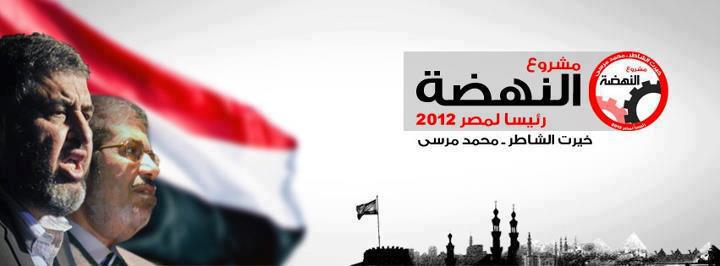
2- Mohammed Morsy and the MB/FJP: "The Renaissance... The Will Of The People."

So far, the campaign has two ads, and you can see a good production budget, and an overall good execution. The first is "We Want A President," wherein a series of citizens representing different segments and groups within society state what they want from, and in, their president. Such demands include a "fear of God when dealing with us," "one who can unify us," "believes in our revolution," "respects our history... and looks forward to our future." The second ad is called "The Time For Work," focusing on the "Renaissance Project" of the MB and Khairat Al-Shater, and shows different groups of people working and participating in various ways within society, then ends with a short zoom out of Mohammed Morsy in what is supposed to be a presidential frame. Two comments that were often raised by many who saw the ads: 1) You cannot see an unveiled girl anywhere in the two ads except in shortly in the first one in the group picture in 00:21; 2) Unlike most other campaign ads, you only see the actual candidate except at the end of the second ad, and not at all in the first ad, and he does not get to speak in either ad. This was argued to be due to a growing belief that Morsy is not the strongest candidate when it comes to his personal charisma, and greater emphasis is thus put on the MB and the Renaissance Project.


3- Amr Moussa: "We Can Face The Challenge."

Here, Moussa is featured quite heavily throughout the ad, uniquely with specially-recorded material, and the ad is generally well produced. Expectedly, the ad features those same different segments of Egyptian society, with them and Moussa completing each other's sentences. Typically, Moussa begins a sentence and then a group different "citizens" complete it. For example, Moussa says "we will not move forward until," then a citizen says "we utilise the capabilities of every Egyptian." The ad makes the standard references to "Education," "National Unity," power of work in society, and such other values and key terms one expects to see in a campaign ad. Expectedly, Moussa and the others highlight the "challenge" we are in, and then they ask people to "truly" consider who has the "experience" and "knowledge" and "willpower" and other characteristics needed to face such a challenge, implicitly signifying that he is the person capable of getting Egypt out of its current woes. Throughout the ending of the ad, everyone then repeats "We Can Face The Challenge." The production and direction are quite good, but the one major drawback is that the photography fails to present Moussa as energetic, but rather frames his non-youthful age with the very pale background he was placed in, and the dark tint of the overall frames he was featured in. This was the same mistake done in Moussa's posters.


4- Abdel Men'eim Abul-Fotouh: "President Of Egypt."

Abul Fotouh says he is an "Egyptian citizen" who has "lived for" his nation all of his life. He then says that he wants to work to make Egypt one of the strongest 20 countries in the world within 10 years, then highlights his belief that "Egypt's Human Wealth" is its greatest asse. He also highlights that he will restore "security in the first 100 days," the importance of Education, and speaks about how Egypt "has a right to be strong with its values and its Islamic Sharia of which the Muslim and the Christian are proud." The visuals otherwise are self-explanatory. The main problem with the ad, which is otherwise generally good, is that it is...sad. It is just eerie, dark, leaves you rather depressed towards the end. This is not how you want to leave people after a campaign ad.


5- Ahmed Shafiq: "I Will Vote For Lieutenant-General Ahmed Shafiq." And "Egypt Is For The Egyptians."

First note, other than stressing his military credentials, "Lieutenant-General Ahmed Shafiq" actually rhymes in Egyptian Arabic, so he always uses it as such. It sounds like "Al-Farie' Ahmed Shafie'." Starting out with the first ad, the visuals are also mostly pretty standard and self-explanatory. The ad begins by showing quick flashes of what has happened throughout the year, with a focus on the "chaos" and uncertainty that has been taking place. Shafiq then drops a title card with a very tacky spark animation below his name, then begins talking about the need for "security," on all levels: "physical, health, livelihood, etc..." Shafiq then is shown surrounded by audiences who support him, with people telling him "we are behind you" and "we love you and we want you." Of course, the reasoning for that, beyond what is normal for every campaign, is to confront the reputation that he is the unwanted candidate of the former regime, being Mubarak's last Prime Minister and close confidante. The second ad is more of a quick spot highlighting his electoral symbol, the ladder, and suffers from being perhaps a bit too "urban." Much of Shafiq's as well posters suffer from being a bit too upper-classed and urban, as I argue in a previous post about the posters of the candidates. One question though that some have asked: was the word "Chaos" heard within the first seconds of the ad actually taken from a Mubarak speech? We'll find out.


Verdict: I'd say Moussa's ad was the best overall.

You might also want to see:


Monday, 30 April 2012

How Much Does An Egyptian Member Of Parliament Make?


Egyptian Member Of Parliament (MP) Basem Kamel of the Egyptian Social Democratic Party answered this interesting question on February 29th, but we only noticed today apparently when the "We Are All Khaled Said" page posted it. According to Kamel, an Egyptian MP makes a standard of LE7925 per month (~$1320 at a LE6=$1), LE150 per general session ($25), and LE75 per committee session ($12.5), with sessions grossing an average LE3000 per month ($500).

Best thing about this tweet? The ending. He said: "You have a right to know, and we owe it to you that you know."

I think that this is possibly the first time in Egypt's modern history that we find out the salaries of MPs.

Sunday, 29 April 2012

Egypt Tries To Get Out Of Its Constitutional Crisis

Some news then. This afternoon, SCAF and multiple political forces agreed on what they see as the principles needed to get out of the current Egyptian constitutional crisis. These six principles were, according to Ahram Online:  

  1. Consensus has to be reached over the proportions alloted to each soceital group or faction in deference to the administrative court ruling. 
  2. Consensus has to be reached over any single constitutional article. In case consensus cannot be reached, a two-thirds majortiy must be reached and if such a majority cannot be reached within 24 hours, then a 57-member majority -- out of 100 members -- would be sufficient. 
  3. Each party will choose its own representatives. Religious institutions will also choose their representatives. Al-Azhar will choose four, while Egypt's churches including the Catholic, Orthodox and Anglican will choose six representatives. Ten legal and constitutional experts will be chosen and a member of each judicial institution will also be represented in the constituent assembly. Farmers will be allotted two constituents and workers will also be granted two seats. Public figures including women, students and the disabled will also be assigned seats. 
  4. Efforts will be exerted to finish the drafting of the new constitution before presidential election runoffs are completed.
  5. Egypt's de-facto leader and SCAF head Field Marshal Hussein Tantawi will call both Upper and Lower houses of parliament to stage a joint meeting to elect members of the constituent assembly.
  6. A supervising committee will be formed to include representatives of the Wafd Party, the Muslim Brotherhood's Freedom and Justice Party, the Egyptian Bloc, El-Hadara Party and the Ghad El-Thawra Party. The committee will also include independent MPs including Mostafa Bakry and Marian Malak."
 A few extra points:

1- Multiple MPs and spokespersons for the forces attending the meeting said they had overall consensus on the new formation of the Constituent Assembly (CA), but the biggest debate was on the voting percentages within it on procedural and substantive issues (such as choosing the articles of the constitution.)

2- When asked how they reached these final percentages, an Islamist MP from the "Construction And Development Party" speaking on Dream TV said while "believe it or not, we pretty much negotiated until we reached 57%. Someone wanted 60%, another wanted 55%, another wanted 70%. There was just no particular logic behind what we reached." (Note: the number I just quoted now were random examples, as I cannot remember exactly which numbers he used. But it was clear he was giving random numbers for demonstration)

3- Head of the Egyptian SDP Dr. Mohammed Abul-Ghar (who boycotted the meeting because he had "attended many such meetings before, all of them lasting hours without any benefits") said these percentages should be raised, even to 90% if possible. A constitution should be made for "100 years" ahead, regardless of which majority is in Parliament at the time of its drafting. I add my voice to the idea that at least 75% of the members of the CA must approve every item of of the Constitution. In fact, I would rather it be 80% or more. The greater the consensus, the better. I just do not like the idea of an emergency voting percentage of 57%. I see it as absolute nonsense, and another point of future conflict.

4- The same Islamist MP from (2) was saying that during the event, they were discussing names of possible members of the CA. Whenever an independent name was suggested, many of the non-Islamist MPs would insist on getting extra background to be sure he had no clear MB or Salafi affiliations, and so they "would bring out their laptops and search online during the meeting" to make sure he wasn't so.

5- SCAF Head Field Marshall Tantawi, said the Islamist MP, had said that they would not leave the meeting until they come out with some real consensus of some sort

6- There seems to be a general consensus on using the defunct 1971 Constitution as a base, pretty much maintaining the first four chapters of it, possibly verbatim. The main question will be the division of powers between the Parliament and the President. According to various sources, the MB wants a mixed system inspired from the French model, but would rather Parliament elect the Prime Minister instead of the president appointing him; and also, they reportedly don't want the President to have the power to dissolve parliament. While I understand the logic of the first idea, I feel that the elected President should be a strong and powerful office, and should also have the power to dissolve parliament if necessary, but with strict constitutional guidelines and limits. In the coming phase, I feel it would be best if power was distributed to more equitably between all branches of government rather than having one branch reign disproportionately supreme (as in the British model, for example.)

7- These "principles" might actually fall apart, and may not necessarily end up being used or adopted. A few MPs speaking on television have reaffirmed that, from what I understand.

8- These attempts towards a more consensual CA would not have taken place hadn't the liberals, leftists, nationalists, and multiple other entities withdrawn from the farcical disaster that was the first CA. They gambled and took a stand against the FJPs attempt at unjustified hegemony, and their protest bore fruit. I hope they do not waste their historic protest on measly victories. Voting percentages in the CA must be increased.


9- While many political forces nominally want to finish the constitution before the presidential elections are over, that remains a nearly impossible task, especially if the elections end from the first round without run-offs.

Saturday, 21 April 2012

Did I Just Find My Candidate - هل عثرت أخيرا على مرشحي المفضل؟!

I don't know about you, but there is something about this candidate that feels both...familiar, yet captivating. It's as if you've known him all of your life.

المرشح ده فيه حاجة كده... تحس إنك تعرفه من زمان.


(Whoever did this poster was a genius - اللي عمل البوستر ده عبقري)

Thursday, 19 April 2012

Quick Guide: Who Are Egypt's Final 13 Presidential Candidates

Out of a total of 23 official Egyptian Presidential candidates, ten were surprisingly disqualified, including three of the strongest candidates and leading contenders (I explain in another post who they are and why they were disqualified). Below is a very quick list of who the 13 remaining candidates are. If you want more info, check the link at the bottom:

Left to right: Abul-Fotouh, El-Awwa and Sabbahy.

1- Abul-Ezz El-Hariry: leftist nominee, socialist and labour activist with a career of nearly 45 years.  He was arrested several times under Sadat in particular, and he was Egypt's youngest MP in 1976. Being one of its co-founders right after the January Revolution, he is running on behalf of "The Popular Socialist Alliance" party.

2- Mohammed Fawzy Eissa: little known law graduate and a former police officer. He is running on behalf of the "Democratic Generation Party."

3- Ahmed Hossam Khairallah: former deputy intelligence director, a surprise candidate. He came from a military background and family with strong Security-oriented credential. He joined the intelligence service until 2005 when he retired after 20 years of service, reaching the post  of Information Director. He is running on behalf of the "Democratic Peace Party."

4- Amr Moussa: former Foreign Minister between 1991 and 2001 and Arab-League Secretary-General until 2011. He is considered the front runner, though his support base appears fragile for some. He is considered by many as the "safe" candidate due to his identity as a recognised statesman, but his critics argue he was too close to the Mubarak regime, was only pushed aside when his popularity eclipsed Mubarak's, and that he appears at times to be more of rhetorician than a doer. He is running independently after obtaining more than 30,000 citizen endorsement signatures.

5- Abdel-Mon'eim Abul-Fotouh: medical doctor, former member of the Muslim Brother Guidance Bureau from 1987 until 2009, was expelled from the MB for deciding to run for President, when the MB was still committed to not fielding a Presidential candidate. He has a long history of political struggle and activism , became famous after confronting Sadat on a televised debate about the former president's crackdown on popular politics and Islamists. He is considered to be a progressive and liberal-leaning Islamist, and is a favourite of many pro-revolution voters. He is running independently after obtaining more than 30,000 citizen endorsement signatures.

6- Hisham Al-Bastawisi: former judge and deputy head of the Court of Cassation, and key figure in the Judiciary Independence Movement during the days of Mubarak. After continuous harassment and intimidatory investigations by the former regime due to his general reformist stance, as well as his and others judges' refusal to supervise the 2005 Presidential elections (which he and the others proclaimed as rigged and fraudulent) he eventually suffered from a heart attack in 2006. Even after the charges were dropped he remained under continuous intimidation and surveillance, eventually moving to Kuwait in 2008 to work there. He returned in the middle of the 18-days January revolution to participate in the protests publicly. He had also previously withdrawn from the electoral race before making a surprise comeback. He is running on behalf of the "National Progressive Unionist Rally Party." (Famously known as El-Tagammu')

7- Mahmoud Hossam El-Din Galal: born to a military family, he was a career police officer. He also worked in the UN Middle-Eastern Human Rights department from 1992-1994. He is running independently after obtaining more than 30,000 citizen endorsement signatures.

8- Mohammed Selim El-Awwa: a commercial lawyer and litigator, dubbed a "moderate islamist and political thinker", he obtained a doctorate from the School Of African And Oriental Studies (SOAS) in in 1972 on the comparative study of punishments in the Islamic and Western legal systems. His father was a disciple of the MB founder Hassan Al-Banna, and El-Awwa was instrumental in defending many MB members against the Mubarak regime.  He often differed with the MB due to primarily the doctrine of strict obedience to leadership, which he refused. He is running independently after obtaining more than 30,000 citizen endorsement signatures.

9- Ahmed Shafiq: former Egypt Civil Aviation Minister, considered as Mubarak's confidante and preferred successor, as well as being Mubarak's last Prime Minister. His candidacy is controversial given his close ties to the former regime. He has a Master's Degree in Military Sciences and a Doctorate in Military Strategy. he is running independently after obtaining more than 30,000 citizen endorsement signatures.

10- Hamdeen Sabbahy: respected Nasserist and populist candidate with a long history of student and political activism and struggle, he is also the founder of the Karama (Dignity) Party (under establishment) and head of the Karama Newspaper.  He came to light in 1977 when he confronted Sadat  about inflation in a famous televised debate with students, and was jailed many times during his career, with the last being in 2003 while he was an MP (and reportedly without the lifting of his immunity) under the charge of the illegal "organising of demonstrations" against the US war in Iraq. He is running independently after obtaining more than 30,000 citizen endorsement signatures.

11- Abdallah Al-Ash'aal: former diplomat who served in places such as Riyadh, Bahrain, Greece and Nigeria, eventually rising to head of the Strategic Planning Unit. He is also said to have authored nearly 70 books on various subjects. He formerly withdrew from the race in support of Khairat El-Shater, only to suddenly make a comeback. He is running on behalf of the Asala Salafist Party.

12- Khaled Ali: left-leaning human rights lawyer, dubbed the "Revolution's candidate", as well the youngest candidate of the list at 40 years of age. He is the founder of the Egyptian Centre For Economic And Social Rights, and is running after obtaining more than 30 endorsements from sitting MPs from either/both houses of Parliament.

13- Mohammed Morsy: member of the MB, head of the FJP (The Freedom And Justice Party, the MB's party), and dubbed by the media as Khairat Al-Shater's "backup candidate." This engineering professor and former MP is running on behalf of the FJP.

For more, please refer to this longer and detailed great guide by Ahram Online on all 23 candidates.

Note: I should update this post soon to add a picture for each candidate, as well as links to their official campaign pages.

You might also want to check out these posts:


A Look Into The Main Posters Of Egypt's Presidential Candidates

Egypt's Presidential Elections still somehow under way, despite all the controversies and roadblocks, now with 13 candidates going forward out of the original 23.  For a break from more serious writing, here is a look at some of the most noteworthy candidate posters out there from the original 23. These are all the official posters, mainly being used on the streets, as well as some used predominantly online.

- Hazem Abu Ismail: independent Salafist candidate, and the most famous poster of all. There have been so many of such posters printed and distributed all over Egypt in such a way that online satire was equally prolific. People made hundreds of jokes about it, as well as making photoshopped images of such posters finding themselves on the moon, all over the Great Wall of China, and on microscopically-imaged microorganisms. It is rumoured that Abu Ismail and supporters printed posters exceeding 40 million EGP in cost (hint: an activist associated with another campaig was raising 16,000 EGP so that he could print 100,000 posters.) Next to it is Abu Ismail's old 2005 Parliamentary elections poster, using much of the same structure. Slogan: "We will live dignified."


 - Mohammed Morsy: described by some as the Muslim Brotherhood's "backup candidate" for having gone into the race in case Khairat El-Shater is not cleared for running for the Presidency due to his legal issues, Morsy still has no official posters. These are the official online posters used on MB websites, including the current welcome screen for Ikhwan Online. Some posters identify him with Al-Shater as basically two sides of the same coin: the MB's "Renaissance Project." That is basically done to increase the appeal of his sudden candidacy. Slogan: "The Renaissance... Will of the people."


 - Khairat Al-Shater: the MB's former deputy guide, said to be its main financier and strongest man, and also its original presidential candidate before disqualification. Posters tried to present a more vibrant image of the man who exhausted from previous imprisonment, health condition and  asuperhuman workload. They also present him as the "architect of the renaissance project." One poster that came out, most likely unofficial, was an online poster (yellow, below) claiming he was "The Joseph Of Our Times, "getting out of prison to rule Egypt." The slogan was also: "The Renaissance... Will of the people."


- Khaled Ali: often described as the "Revolution's candidate", this left-leaning human rights lawyer chose a simpler image, more youth-and-common-man-oriented, in his posters. He is the youngest candidate of all, and is said to be running officially to represent the purer and non-compromising goal of the revolution. Slogan: "We will fulfill our dream."


- Mohammed Selim El-Awwa: an independent candidate, a "moderate islamist and political thinker", his campaign is yet to take on full form. Posters are currently still quite varying, many unofficial. But his official online posters are the ones below. His message and slogan: "If I make mistake, then help me rectify. If I lost my path, then my removal from office is a duty."


- Abul-Ezz El-Hariry: leftist candidate running on behalf of the Popular Socialist Alliance Party. His current Slogan: "The Revolution Continues." Slogan comes from one of the slogans and catch phrases used by revolutionaries after the January revolution, as well as the name of the electoral alliance that brought together younger candidates representing the revolution.


- Amr Moussa: former Foreign Minister and former Arab League Sec-Gen, he is the presumed front runner. Moussa is going for a look that would highlight that he is the "safe, respectable and strong" candidate. First up, you can find the main poster, focusing on his stature. Then, the campaign took another staple picture (found in the second poster) and put it on many posters with different backgrounds and different tag-lines. For example, the one below is him in front of a mosque and a church, with the tag line: "National Unity." The campaign slogan: "We rise up to the challenge."


- Abdel-Moneim Abul-Fotouh: former leading MB figure, current independent presidential candidate. Abul-Fotouh is running on the idea of being the "Consensual Candidate," the one that all Egyptian can unite behind. He has a background in Islamism, yet is also considered progressive. For example, poster three presents him as the "Voice Of Moderation." Second poster describes his alleged characteristics, such as "strong and honest", "religious and open-minded", "a visionary." It is suggested that the choice of orange for his campaign colour is a reference to his relative youth and vitality compared to most candidates. The Slogan: "President Of Egypt." I expected another additional slogan soon.


- Ahmed Shafiq: former close confidante of Mubarak, rumoured to be his preferred choice for successor, he was also the civil aviation minister and the last Prime Minister of the Mubarak regime. His candidacy remains a source of controversy given such close ties with the regime overthrown by the revolution. Shafiq is said to have "the most elegant" posters by a few commentators, yet still criticised for being a bit classist or alienating vis-a-vis less affluent and rural voter. First poster is official, the second two appear to be semi-official somehow. Slogan: Egypt for everyone, and by everyone.


- Ayman Nour: liberal politician, was running (before disqualification) on behalf of the "Tomorrow Of The Revolution Party", and first candidate to oppose Mubarak significantly in a multi-candidate elections in 2005 (imprisoned shortly after), he was a late comer to these 2012 elections. I could not find a proper resolution image of his poster, but I found pictures of them on the streets, and the original picture without the text. He it noted for having said with genuine frustration: "I cannot find a place to put my posters!".. due to Abu Ismail's posters being everywhere. Slogan: "We were a ray a of light... in a time of darkness" (a reference to light since "Nour" means "light") - and "For a free Egypt"


- Hamdeen Sabbahy: independent candidate, Nasserist, Sabbahy has a long history of political activism. He is running on a populist platform, attempting to appeal mainly to less affluent and middle-class voters. Some detractors of the poster have claimed it lacked a more "presidential" look to it, especially for such a respectable candidate. Slogan: "One of us, president of Egypt."


- Omar Soleiman: this former VP and Intelligence chief made a very late entry into the race, only to be disqualified as fast as he had entered. I have searched for an official poster, but couldn't find any. This, however, was the most common poster used and posted by supporters, online and offline. Below it was a better effort by his supporter's Facebook page. Slogan: "The true alternative. Omar Soleiman, President of the Republic." 


- Ashraf Barouma: candidate for the Masr Al-Kinana Party, posters show different sides of the  versatile candidate. Now, Barouma was not really a serious contender (he was disqualified as well), but he was talked about much due to a surname that had some comedic undertones in Arabic as well as (says the poster in casual attire) the fact that he had a mysterious plan to "end poverty in Egypt in...228 days." I don't think Hernando De Soto himself had such a day-by-day plan for poverty eradication. Slogan: "Ashraf Barouma, for leader of Egypt." and "Leadership has many meanings and principles... We have lived them."


- Mohammed Hosny Mubarak: his 2005 campaign posters, for ol' times' sake. Yes I know that, well, technically he's not running...yet.